
Description
Prince Tisavarakumara, the Prince Damrong Rajanubhab (สมเด็จพระเจ้าบรมวงศ์เธอ พระองค์เจ้าดิศวรกุมาร กรมพระยาดำรงราชานุภาพ; 1862 – 1943).
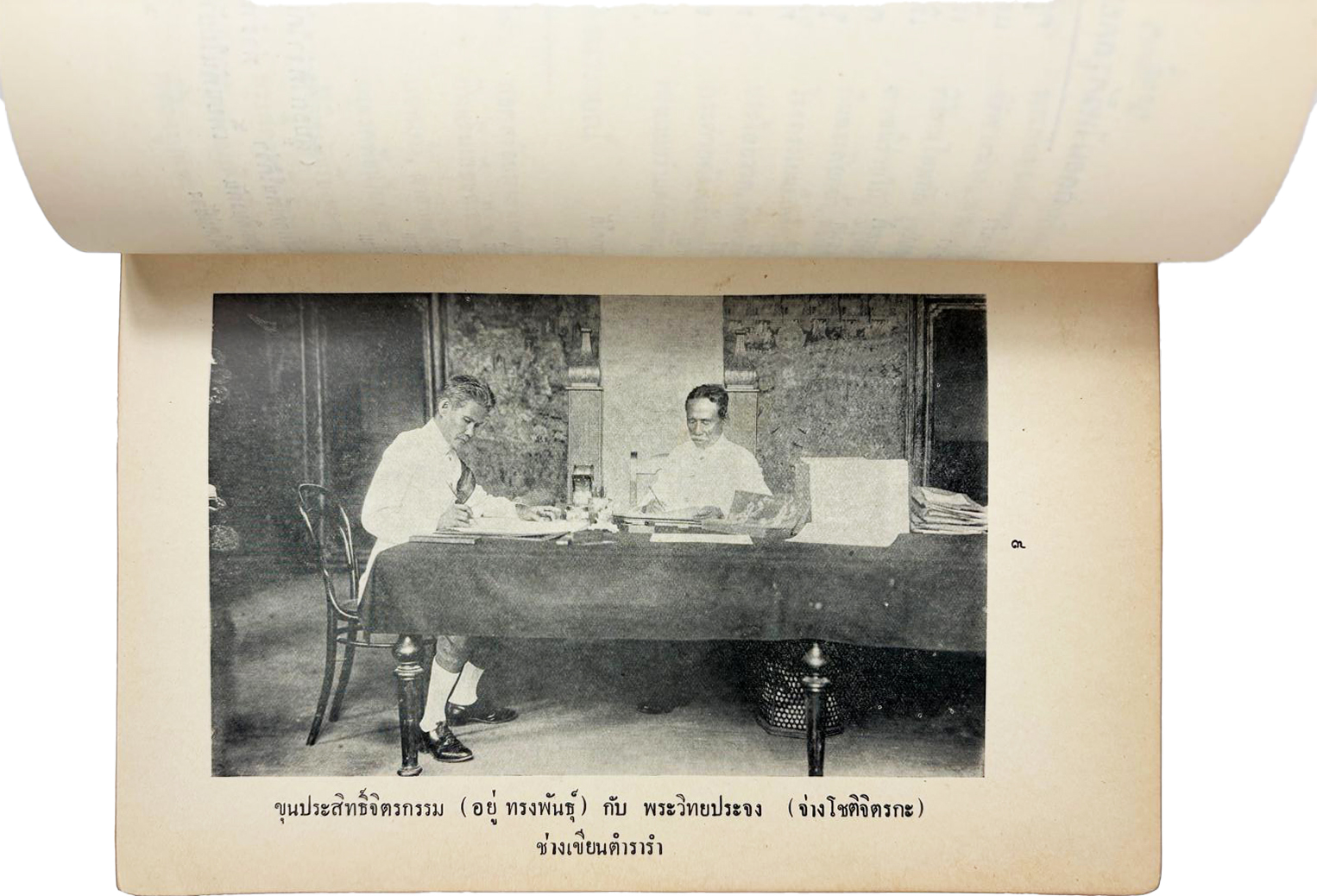
Poh Chang School of Arts and Crafts, Authors of Illustrations
หอพระสมุด
วชิรญาณ
ฑะ
ตำราฟ้อนรำ
ฉบับเรียบเรียงในหอพระสมุดวชิรญาณสำหรับพระนคร
ทรงพระกรุณาโปรดเกล้า ฯ ให้พิมพ์
ในงารพระราชทานเพลิงพระศพ
สมเด็จพระเจ้าน้องยาเธอ เจ้าฟ้าจุฑาธุชธราดิลก กรมขุนเพ็ชรบูรณ์อินทราชัย
ณพระเมรุท้องสนามหลวง
พิมพ์ที่โรงพิมพ์โสภณพิพรรณธนากร
รูปภาพทำที่โรงเรียนเพาะช่าง
[Vachirayan Library, Textbook of Thai Dance. Compiled at the Vajirayan Library for Bangkok. Printed by royal command on the occasion of the royal cremation of His Royal Highness Prince Chutathut Tharadilok, Krom Khun Phetchabun Intharachai at the Royal Crematorium, Sanam Luang]
Bangkok: Sophon Piphanthanakorn Printing House [December 1923].
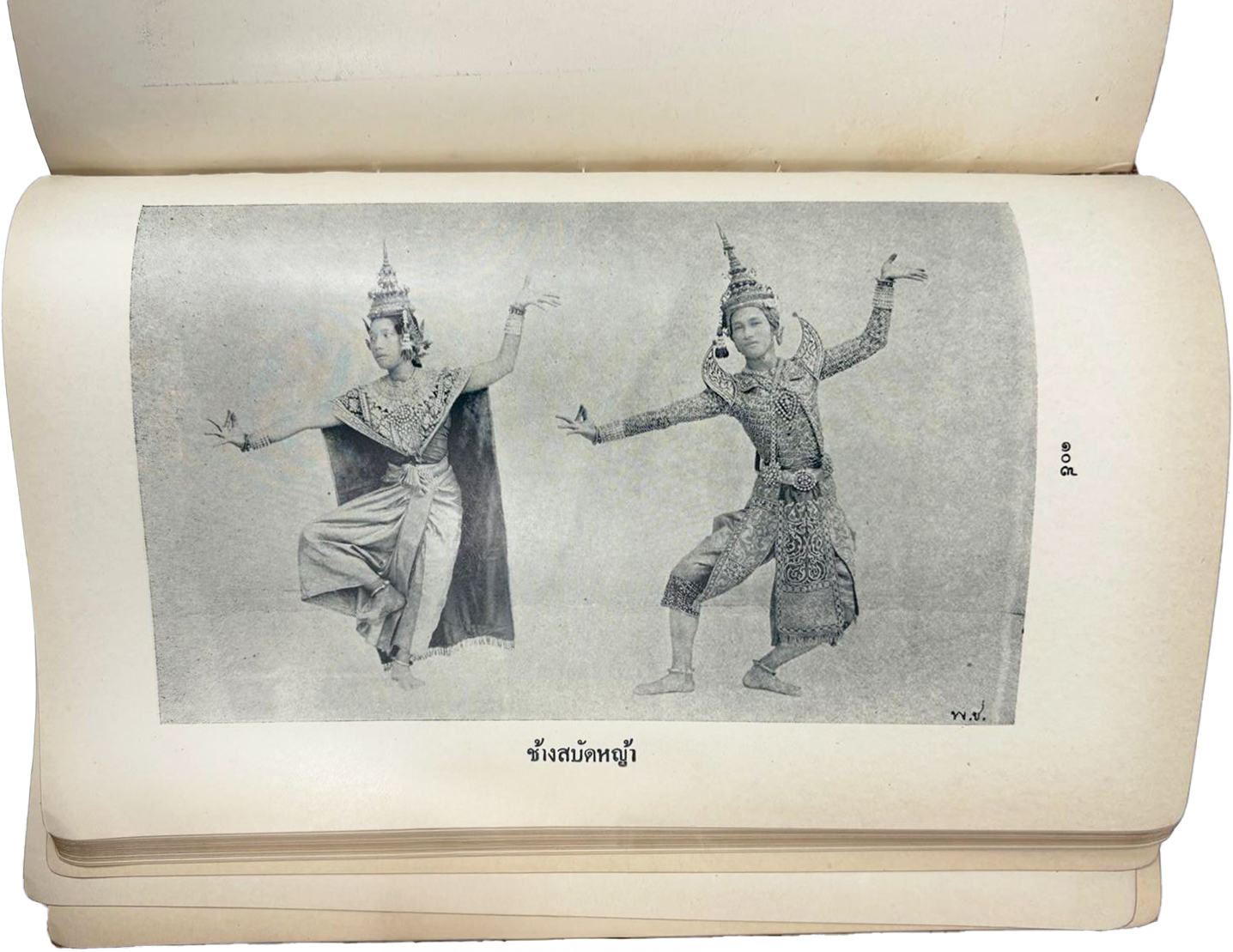
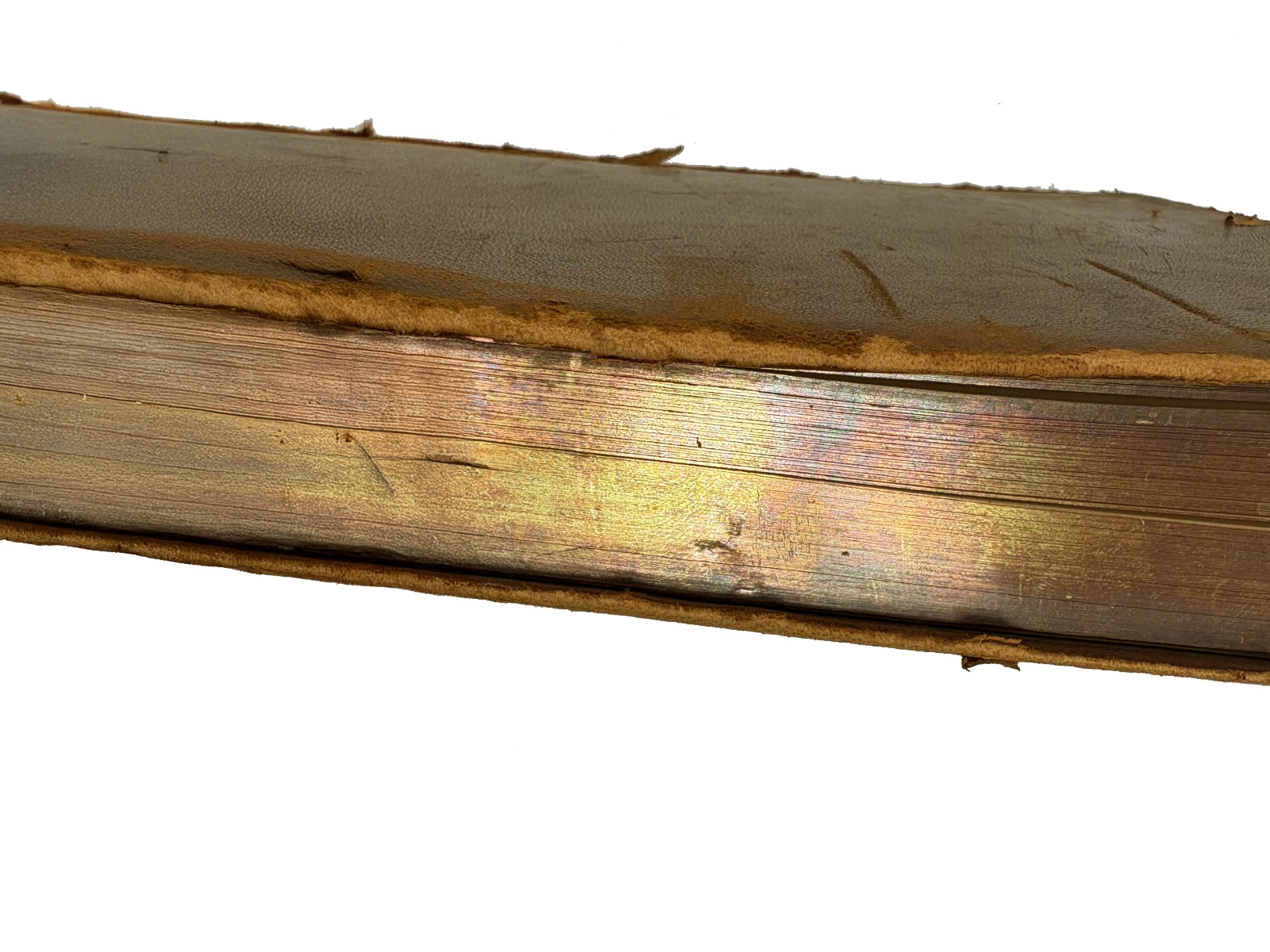
8°. Two blank endpaper sheets, 1 blank sheet, printed title page, full page portrait of .., 7 pp. text, 1-8 numbered sheets with black and white illustrations (printed recto only), 8-42 pp. text, 9-75 numbered sheets with black and white illustrations, 43-45 pp. text, 76-157 (p. 132 marked twice) numbered sheets with black and white illustrations, 46-47 pp. Text, 158-190 numbered sheets with black and white illustrations, two blank sheets. Contemporary brown morocco with marbled endpapers, lettering on the spine reads: Principe Damrong. Trattato di Correografia Siamese. Silber-gold ends.
(Front endpapers broken in hinges, binding with scratches, mostly in margins, cracked in hinges).
A rare and richly illustrated Thai cremation book, issued in memory of Prince Chudadhuj Dharadilok, Prince of Phetchabun (จุฑาธุชธราดิลก; Chuthathut Tharadilok, 4 July 1892–8 July 1923), a son of King Chulalongkorn the Great (Rama V, 1853–1910). Educated in England, Prince Chudadhuj was widely admired for his cultivated interest in the arts, music, and performance traditions of the Siamese court.
The volume was commissioned by his brother, King Vajiravudh (Rama VI, 1881–1925), the sixth monarch of the Chakri dynasty. Drawing upon a manuscript preserved in the National Library of Thailand, the book presents a detailed exposition of classical Thai dance forms, accompanied by high‑quality illustrations characteristic of early 20th‑century royal publications.
The work was edited by Prince Damrong Rajanubhab (สมเด็จพระเจ้าบรมวงศ์เธอ พระองค์เจ้าดิศวรกุมาร กรมพระยาดำรงราชานุภาพ; 1862–1943), a son of King Mongkut (Rama IV). As Minister of the Interior and a central architect of Siam’s administrative and educational reforms, Damrong Rajanubhab is regarded as the founder of modern Thai historiography and education. His editorial involvement underscores the cultural and scholarly significance of the volume within the broader context of early 20th‑century Thai statecraft and court culture.
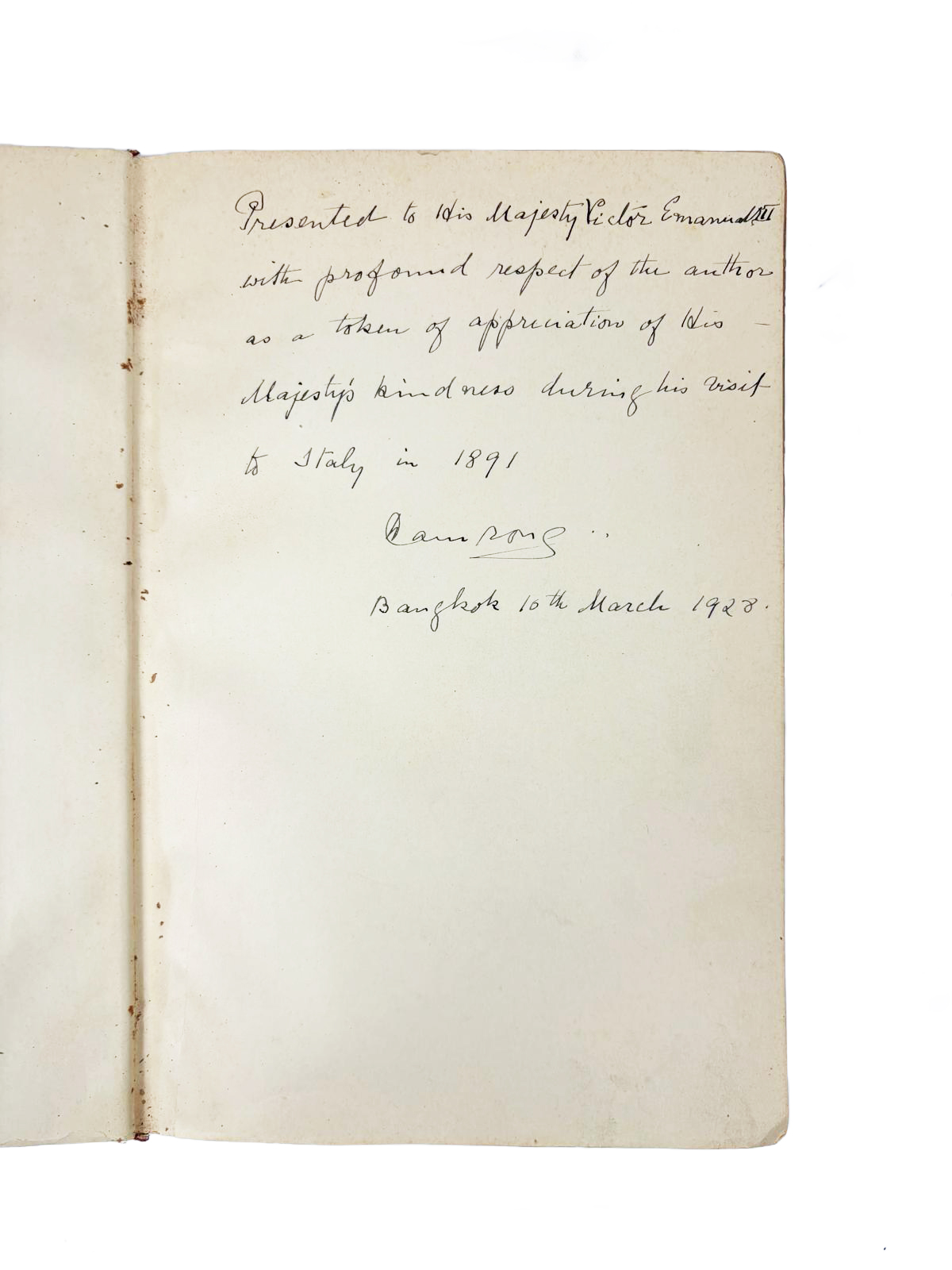
Prince Damrong presented this example to King Victor Emmanuel III of Italy (1869–1947) in 1928, accompanied by an inscription in English:
Presented to his Majesty Victor Emanuel III with profound respect of the author as a token of appreciation of His Majesty’s kindness during his visit to Italy in 1891
Damrong
Bangkok 10th March 1928
We could trace three examples in Thai institutions (Chulalongkorn University, National Library of Thailand, Thammasat University).
Thai Cremation Volumes
Cremation Volumes are a unique Thai genre that blends Buddhist literature with biographies, offering insights into Thai culture and society. These volumes were given to attendees at cremation ceremonies, which occurred after lengthy rituals for deceased individuals, typically from higher social classes. Ceremonies attracted large crowds, sometimes thousands.
The booklets were distributed as acts of merit-making in Buddhism and were not sold commercially.
The first cremation volumes appeared in the 1870s, or according to some sources, in 1880. Their popularity increased in the early 20th century and continues to this day. The present collection of volumes, published between 1911 and 1921, represents the earlier period of the cremation volumes. The earliest one was printed for the cremation ceremony of King Chulalongkorn (1853 – 1910) and differs from the other one in many ways. Firstly, it was printed in Thai and English languages, and secondly, it was printed on the eve of the new era of cremation volumes, starting with the following Thai king, Rama VI.
All the following works were created after the establishment of the Wachirayan Library as Thailand’s National Library or National Archives, located within the Grand Palace, which housed a significant number of original manuscripts. Starting in 1910, during the reign of King Rama VI, also known as Vajiravudh, who studied law and history at the University of Oxford, the printing of texts for the cremation volumes was officially overseen by the library.
This initiative was prompted by several historical changes. Most notably, there was a reaction against the publications of Christian missionaries, who had introduced printing to Thailand but primarily produced books reflecting a Western perspective of the country, often featuring only a limited number of Thai texts without adequate insights into the original scripts. Another influential factor was the emergence of a new bourgeois culture in late nineteenth-century Thailand.
Due to a lack of funds, the National Library was in need of support. The new bourgeois class emerged as the ideal sponsor to finance the publication of traditional Thai and Buddhist literature. It funded the first editions of these texts as commemorative publications in honor of their beloved deceased.


